📅 New math genius every single day — follow so you never miss one
▶ Subscribe FreeAbout Marie Curie
Marie Curie was a Mathematical Physics mathematician born in 1867. The only person in history to win Nobel Prizes in two different sciences.
Discovered polonium and radium. This breakthrough changed the trajectory of mathematics at a time when the world was in the 19th century, the golden age of mathematical rigour.
The impact is still felt today. Radioactivity research led to cancer radiotherapy, nuclear power, and carbon dating.
Mathematical Physics
Discovered polonium and radium
Radioactivity research led to cancer radiotherapy, nuclear power, and carbon dating
Born 1867 · 19th Century
Why Marie's Work Still Matters Today
Radioactivity research led to cancer radiotherapy, nuclear power, and carbon dating. This is not merely a historical footnote — the ideas pioneered by Marie Curie are embedded in the fabric of modern technology, science, and everyday life.
Mathematical Physics applies the full power of advanced mathematics to understand the laws that govern the physical universe — from quantum mechanics to general relativity.
The Math Connection — What Students Learn from Marie
Radioactive decay is exponential subtraction — losing half each half-life. Division by time!
What Is Mathematical Physics?
Mathematical Physics applies the full power of advanced mathematics to understand the laws that govern the physical universe — from quantum mechanics to general relativity.
Frequently Asked Questions about Marie Curie
Who was Marie Curie?
Marie Curie was a Mathematical Physics specialist born in 1867. Discovered polonium and radium; first to win two Nobel Prizes.
What is Marie Curie famous for?
The only person in history to win Nobel Prizes in two different sciences
How did Marie Curie impact modern mathematics?
Radioactivity research led to cancer radiotherapy, nuclear power, and carbon dating
What field of mathematics did Marie Curie work in?
Marie Curie worked in Mathematical Physics. Mathematical Physics applies the full power of advanced mathematics to understand the laws that govern the physical universe — from quantum mechanics to general relativity.
Why should students know about Marie Curie?
Radioactive decay is exponential subtraction — losing half each half-life. Division by time!
When was Marie Curie born?
Marie Curie was born in 1867, in the 19th century, the golden age of mathematical rigour.
More Mathematical Physics Mathematicians
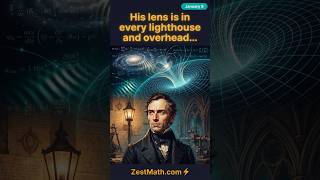
His lens is in every lighthouse and overhead projector on Earth
Augustin Fresnel January 9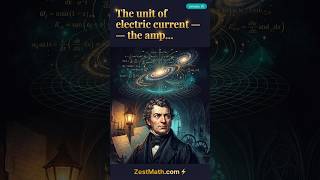
The unit of electric current — the amp — bears his name forever
André-Marie Ampère January 20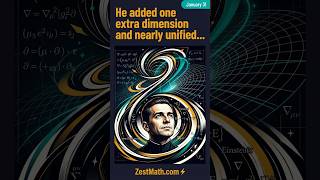
He added one extra dimension and nearly unified all of physics
Theodor Kaluza January 31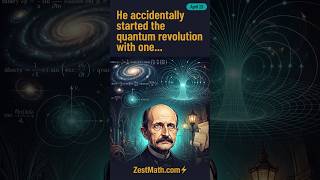
He accidentally started the quantum revolution with one equation
Max Planck April 23More Math Genius Videos
ZestMath covers one mathematician for every day of the year — here are more stories.



Keep Exploring Mathematics
Master every math word problem with the complete signal words reference — 10 printable pages covering every operation.