📅 New math genius every single day — follow so you never miss one
▶ Subscribe FreeAbout Andrew Carnegie
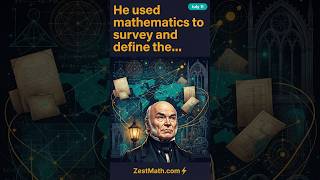
Andrew Carnegie was a Applied Mathematics mathematician born in 1835. He built libraries across America after using mathematics to build the world's biggest steel empire.
Steel industry mathematical optimisation. This breakthrough changed the trajectory of mathematics at a time when the world was in the 19th century, the golden age of mathematical rigour.
The impact is still felt today. Steel production efficiency uses thermodynamic equations — heat balance calculations.
Applied Mathematics
Steel industry mathematical optimisation
Steel production efficiency uses thermodynamic equations — heat balance calculations
Born 1835 · 19th Century
Why Andrew's Work Still Matters Today
Steel production efficiency uses thermodynamic equations — heat balance calculations. This is not merely a historical footnote — the ideas pioneered by Andrew Carnegie are embedded in the fabric of modern technology, science, and everyday life.
Applied Mathematics uses rigorous mathematical tools to solve real-world problems across science, engineering, economics, and medicine. It bridges abstract theory and practical application.
The Math Connection — What Students Learn from Andrew
Bessemer process: oxygen × carbon = CO₂. Stoichiometry is chemistry's multiplication!
What Is Applied Mathematics?
Applied Mathematics uses rigorous mathematical tools to solve real-world problems across science, engineering, economics, and medicine. It bridges abstract theory and practical application.
Frequently Asked Questions about Andrew Carnegie
Who was Andrew Carnegie?
Andrew Carnegie was a Applied Mathematics specialist born in 1835. Steel industry mathematical optimisation; library philanthropy.
What is Andrew Carnegie famous for?
He built libraries across America after using mathematics to build the world's biggest steel empire
How did Andrew Carnegie impact modern mathematics?
Steel production efficiency uses thermodynamic equations — heat balance calculations
What field of mathematics did Andrew Carnegie work in?
Andrew Carnegie worked in Applied Mathematics. Applied Mathematics uses rigorous mathematical tools to solve real-world problems across science, engineering, economics, and medicine.
Why should students know about Andrew Carnegie?
Bessemer process: oxygen × carbon = CO₂. Stoichiometry is chemistry's multiplication!
When was Andrew Carnegie born?
Andrew Carnegie was born in 1835, in the 19th century, the golden age of mathematical rigour.
More Applied Mathematics Mathematicians
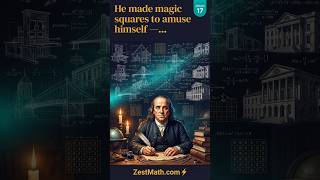
He made magic squares to amuse himself — they still baffle mathematic…
Benjamin Franklin January 17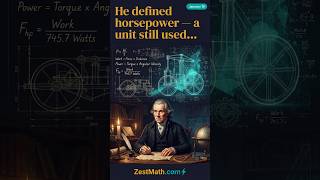
He defined horsepower — a unit still used to sell cars today
James Watt January 19
His math lights up every home on Earth
Nikola Tesla July 10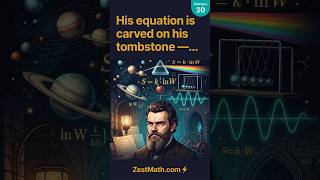
His name became a unit of measurement — the highest honour in science
Ernst Werner von Siemens February 18More Math Genius Videos
ZestMath covers one mathematician for every day of the year — here are more stories.
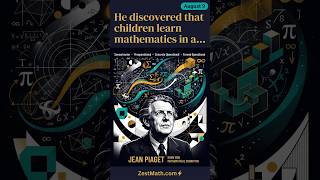 Roger Penrose Mathematical Physics
  Queen Victoria Mathematics of Empire
  Mick Jagger Mathematical Rhythm
  Gertrude Stein Mathematical Language
  Buckminster Fuller Mathematical Architecture
  Johns Hopkins Applied Mathematics
  Alois Alzheimer Mathematical Medicine
  Nikola Tesla (patent day) Electrical Mathematics
 Keep Exploring Mathematics
Master every math word problem with the complete signal words reference — 10 printable pages covering every operation.